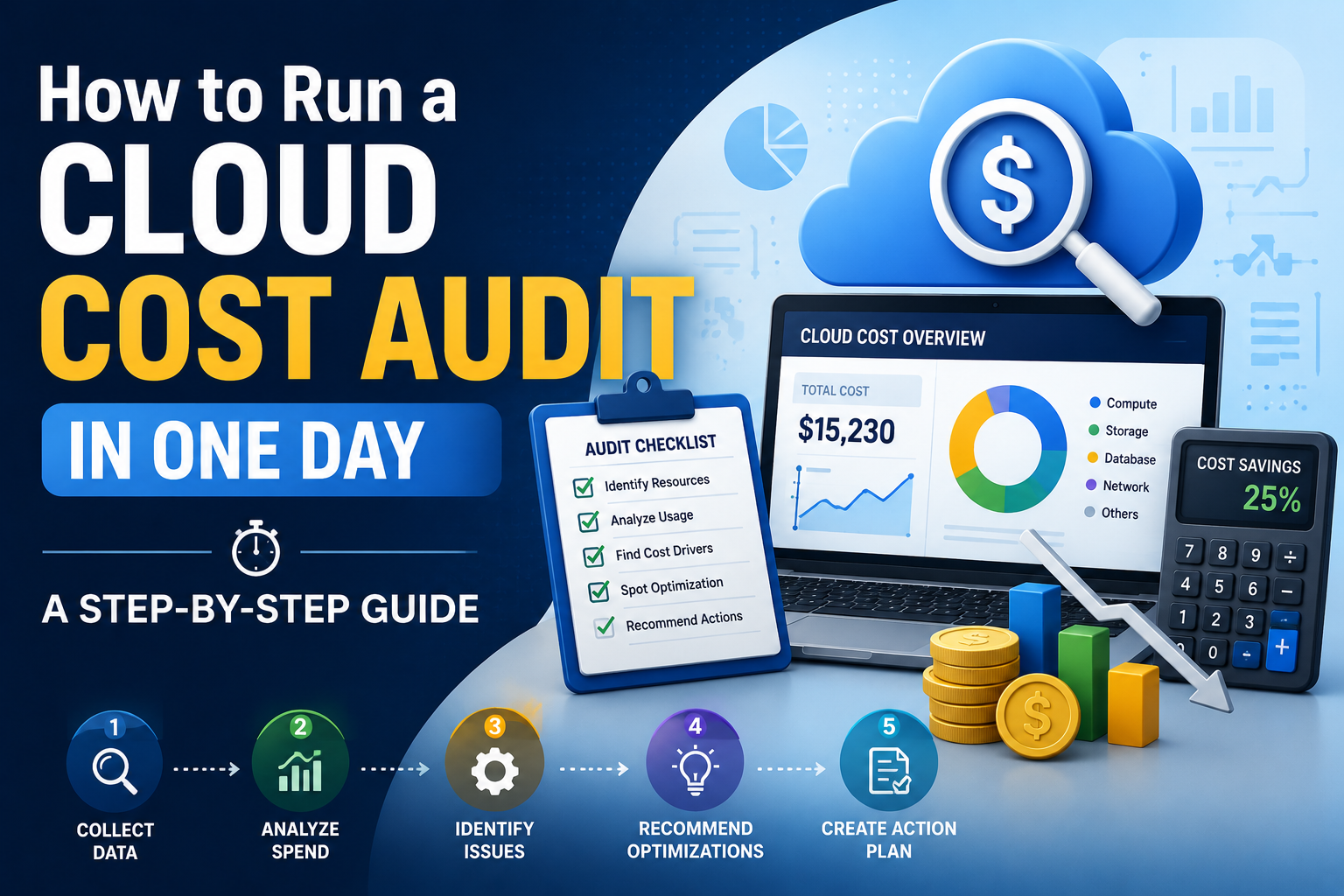
Most cloud cost conversations start the same way. Someone in finance pulls up last quarter's AWS or Azure bill, and there's a moment of uncomfortable silence. The number is higher than expected, nobody quite knows why, and suddenly the IT team is asked to "look into it."
Here, you don't need a three-week engagement to understand where your cloud spend is going. A focused, single-day audit will surface 80% of what matters. What you do with those findings is a separate conversation.
Morning: Get Visibility Before You Form Opinions
The first mistake organizations make is jumping to conclusions before they have clean data. Someone assumes it's the dev environments. Someone else blames the data pipeline. Neither of them has looked at the actual billing breakdown.
Look for untagged resources immediately. In practice, untagged infrastructure is almost always orphaned or poorly governed. If you can't attribute spend to a team or project, that's a red flag, not a mystery to solve later.
One thing organization often underestimate is the gap between what's provisioned and what's actually used. Across mid-size Indian enterprises, we've seen average CPU utilization on reserved EC2 or Azure VM instances sitting below 15%. You pay for the whole machine. That's not a small rounding error.
Late Morning: Find the Waste
By mid-morning you should have a clear picture. Now you're looking for four things specifically:
Idle and unattached resources, unattached EBS volumes, unused Elastic IPs, stopped VMs that still have premium disks attached. These are pure cost with zero business value. They accumulate quietly.
Oversized instances require judgment, not just automation. A database instance running at 8% CPU might genuinely need that headroom for burst traffic. Or it might have been right-sized three years ago and never revisited since the schema changed. Context matters.
Data transfer costs are consistently underestimated, especially when workloads span multiple availability zones unnecessarily. Keeping traffic within a single AZ where possible is one of the easiest wins nobody talks about.
Reserved vs. on-demand misalignment — if your baseline workload is predictable and you're running significant on-demand instances, you're likely overpaying by 30–40%. Reserved or savings plan coverage for stable workloads is straightforward ROI.
Afternoon: Prioritize, Don't Boil the Ocean
A common mistake is trying to fix everything at once. A one-day audit should produce a prioritized action list, not a transformation roadmap. Separate findings into three categories: immediate cleanup (idle resources, untagged spend), short-term optimization (rightsizing, commitment coverage), and structural changes (architecture reviews, governance policy).
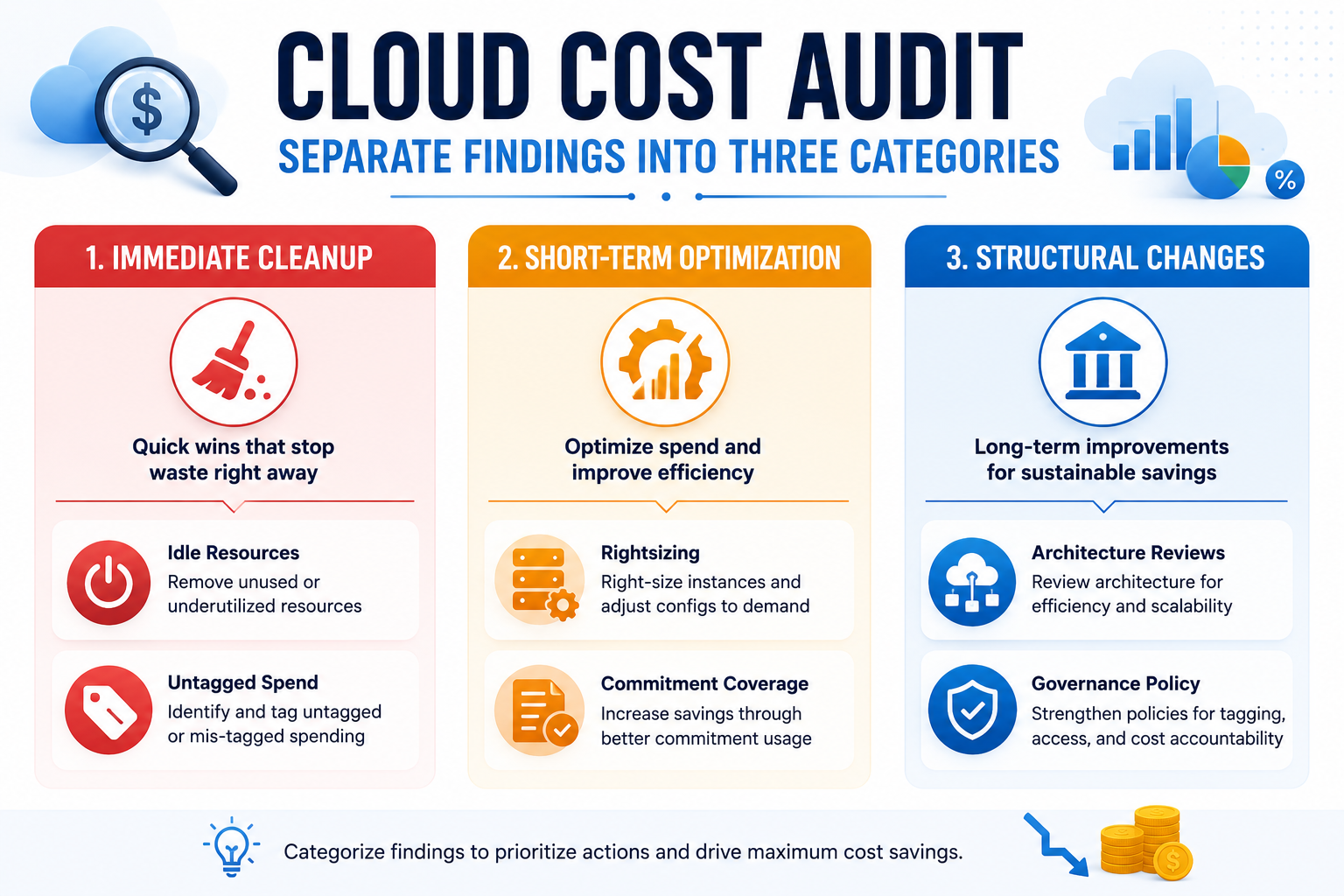
The structural stuff takes time and often requires business sign-off. Don't conflate it with the quick wins.
For context, NASSCOM data suggests Indian enterprises waste roughly 35% of their cloud spend on average — which, for a company spending ₹2–3 crore annually on cloud, is real money sitting idle. The one-day audit won't recover all of it, but it will tell you exactly where to look.
This process works best when someone owns the output. An audit without accountability is just a document.
At Stornox, we work with IT teams and CTOs to cut through exactly this kind of cloud sprawl — not with generic dashboards, but with hands-on analysis tied to how your infrastructure actually runs. If your last cloud bill made someone uncomfortable, let's talk about what a real audit looks like for your environment.
Ready to Reduce Your Cloud Storage Costs?
Discover how Stornox helps enterprises simplify storage, improve performance, and avoid unpredictable egress costs.